5
Semi-structured interviews
 Portfolio
A mobile companion for the three minutes before something important. Built to support readiness, not to cure nervousness.
When users are minutes away from a presentation, interview, or high-pressure meeting, their cognitive capacity drops. Repetitive thoughts pile up, mental clutter builds, and current calming tools either take too long or demand too much attention to be useful in that moment.
I don't need a full solution. I just need something that helps me stop spiralling right before I begin.
Meditation apps are too long. Breathing tutorials demand focus. The phone is the distraction, not the fix.
Stress before performance was consistently described not as panic, but as clutter — repetitive thoughts, mental noise, loss of focus. Coping behaviour varied widely: some users wanted distraction, others wanted to offload thoughts, others wanted a passive reset.
How might we help users with performance anxiety or panic?
How might we help users get back into focus?
How might we distract users for a few seconds to break overthinking?
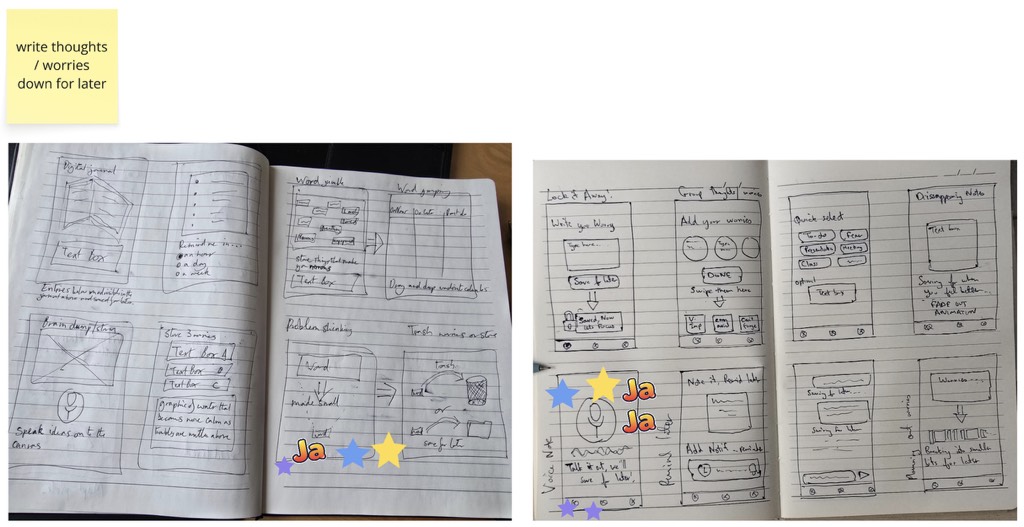
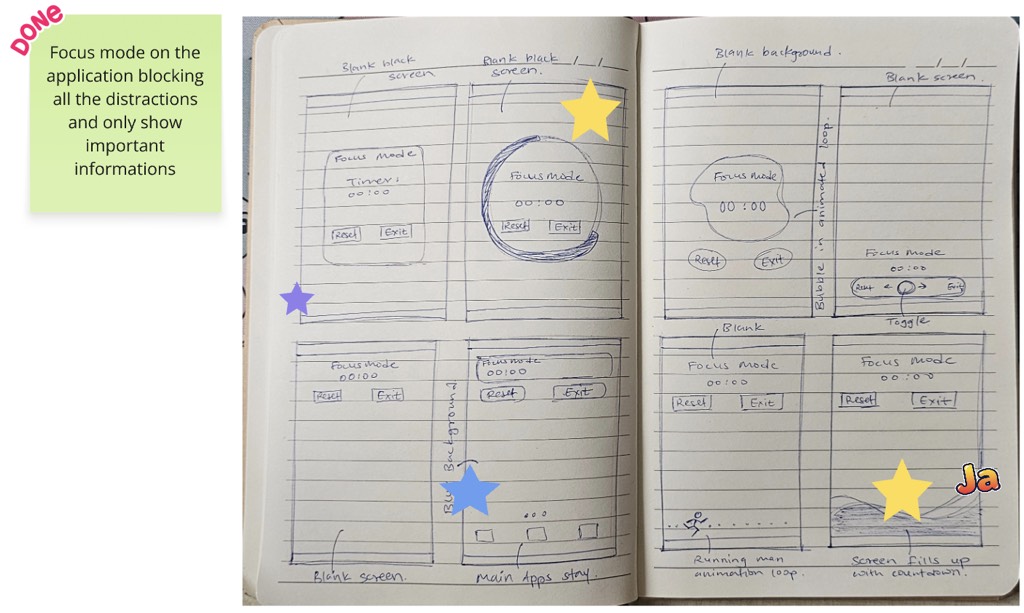
A co-design session with five UX design students. At first, everyone proposed an idea to each statement - then they voted for the best idea. Crazy 8 sketches per HMW idea winner, tied votes resolved with a runoff.
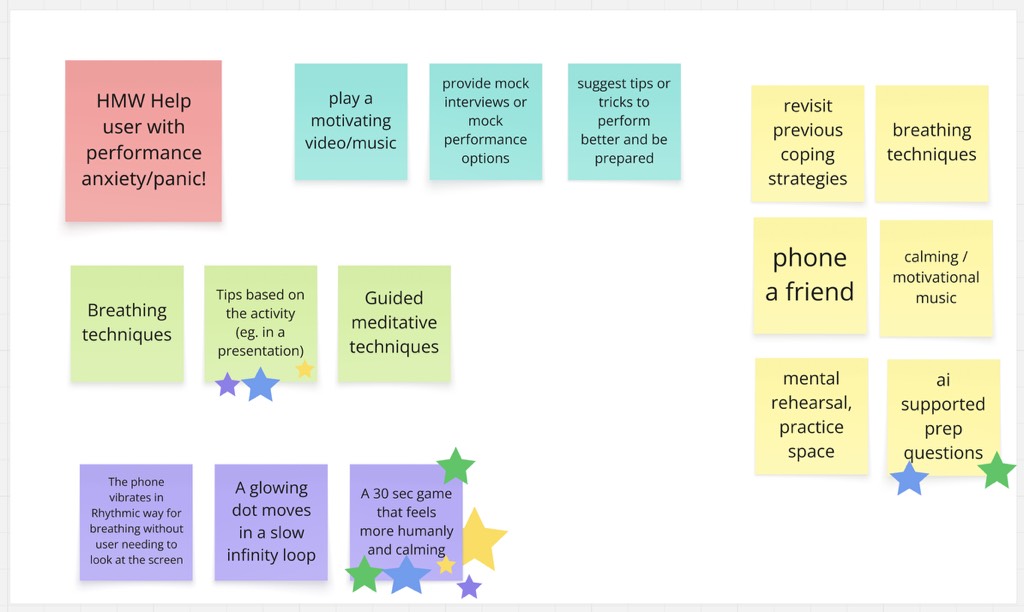
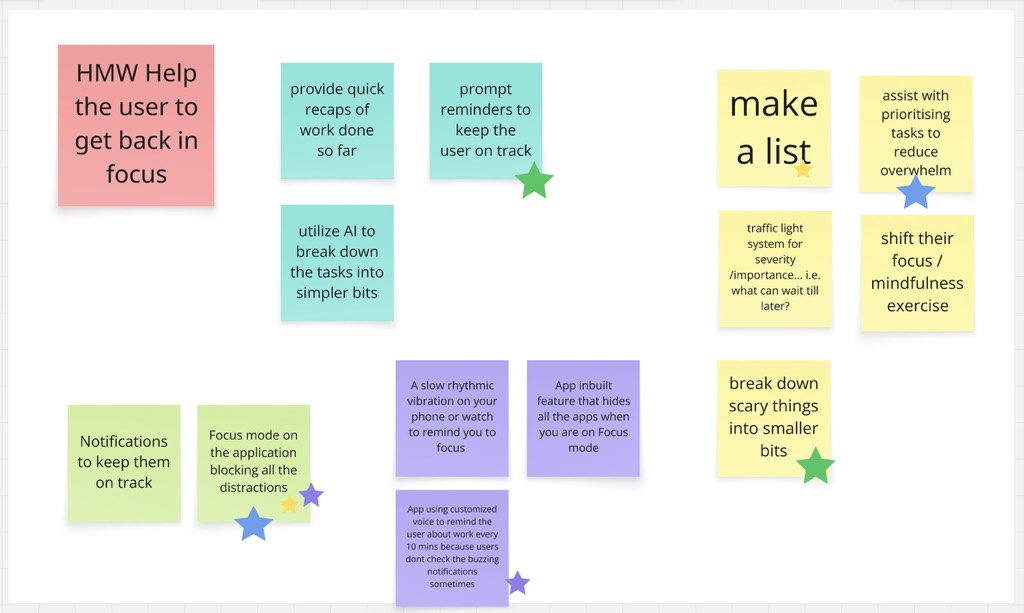
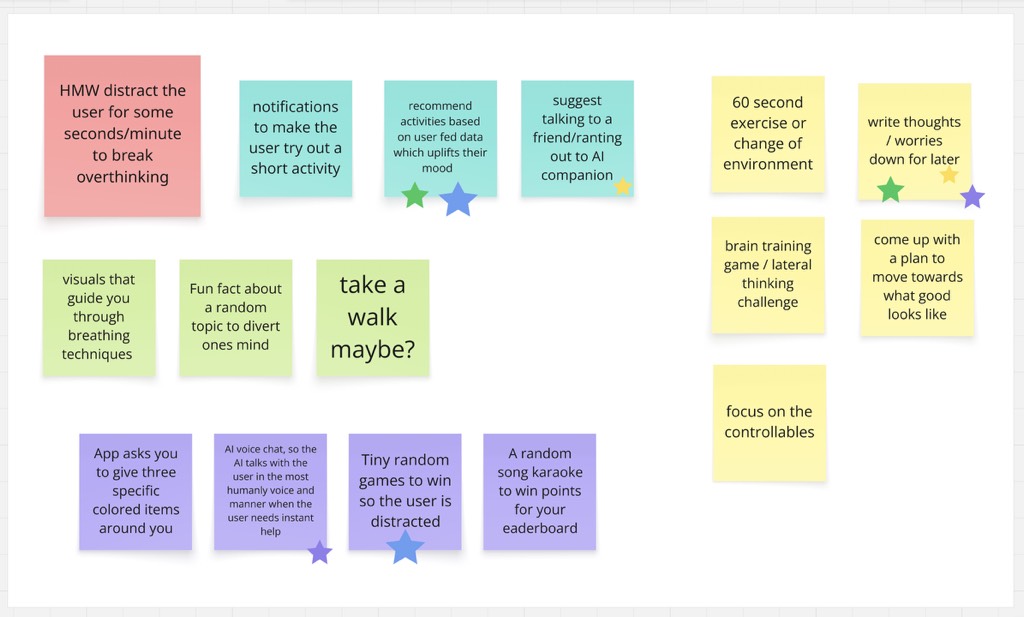
| HMW | Selected direction |
|---|---|
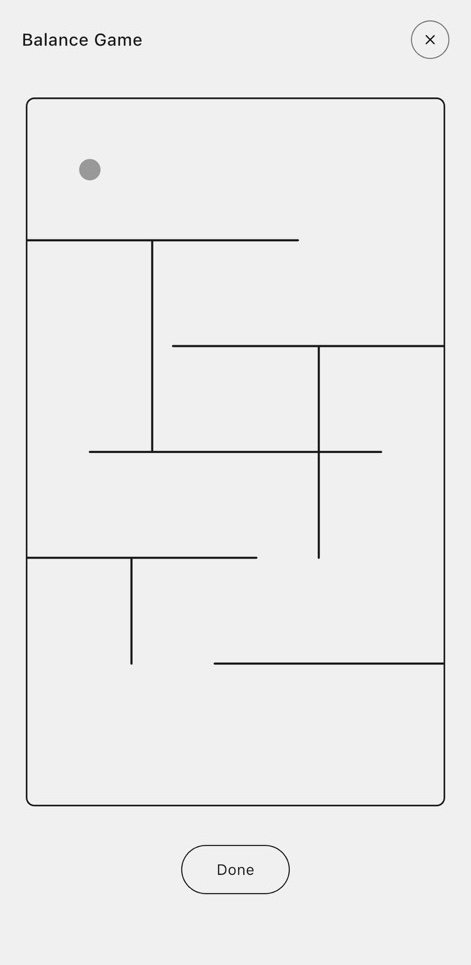
| Anxiety / panic | 30-second balance game |
| Back into focus | Focus mode blocking distractions |
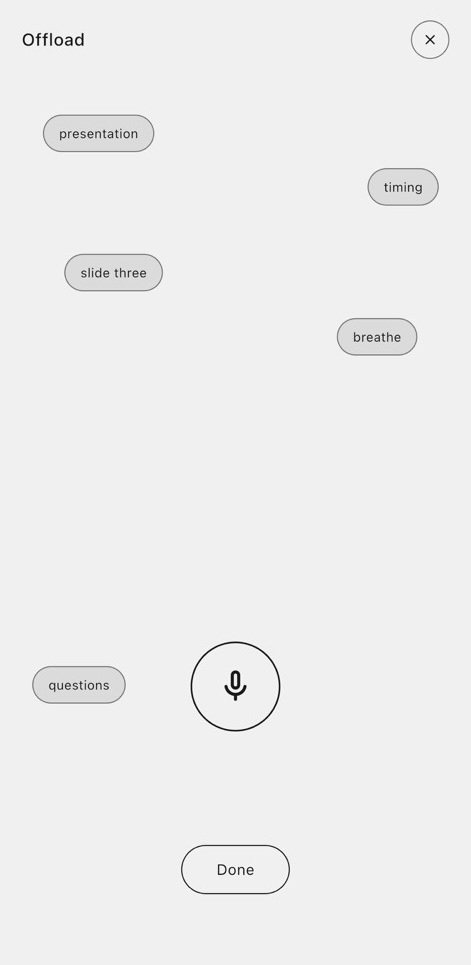
| Break overthinking | Thought offloading |
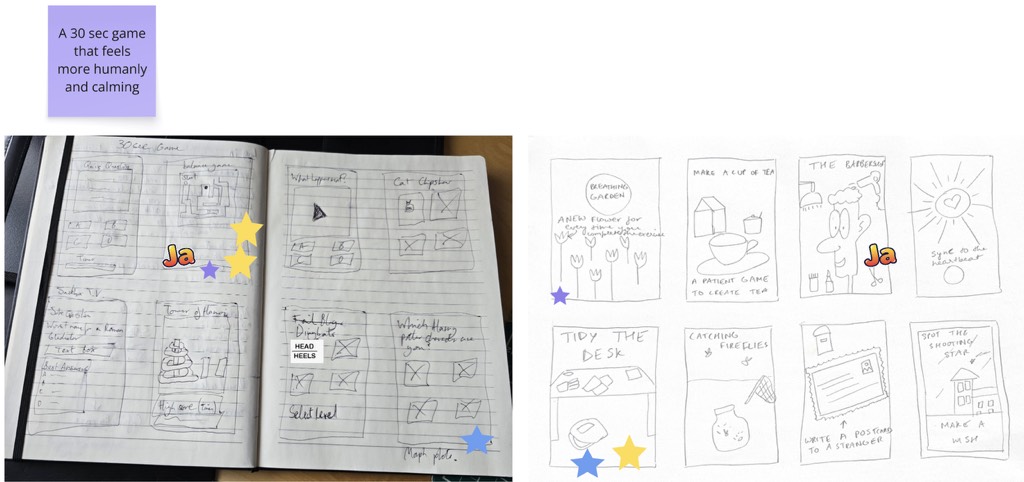
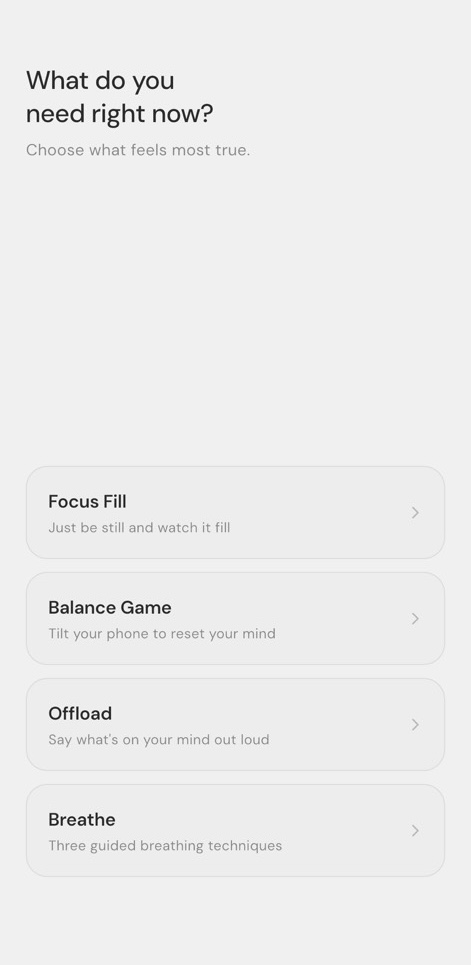
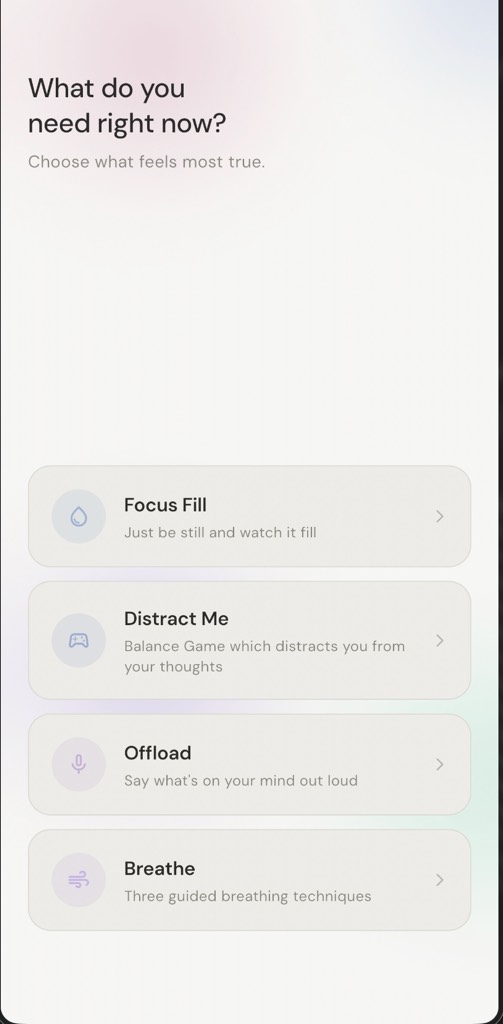
Stress is not experienced uniformly. Built four targeted modes instead of one universal grounding sequence.
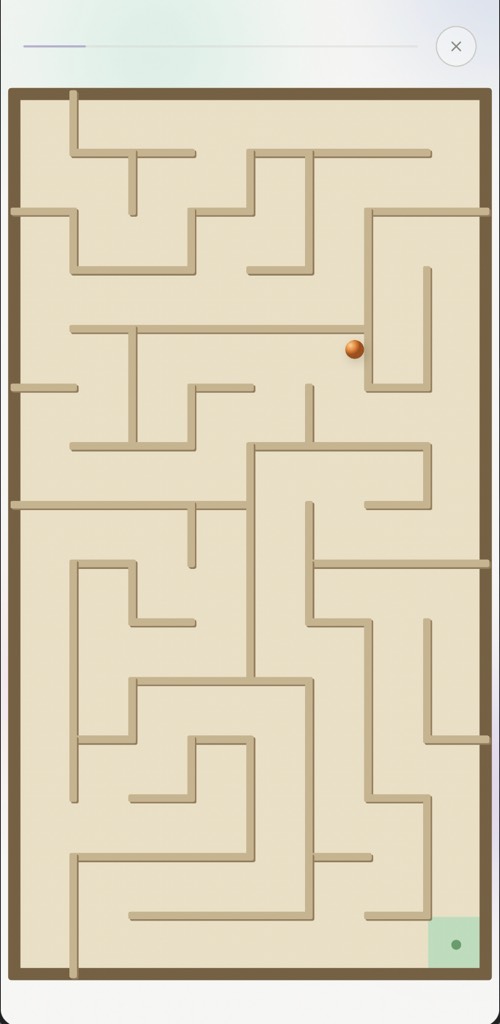
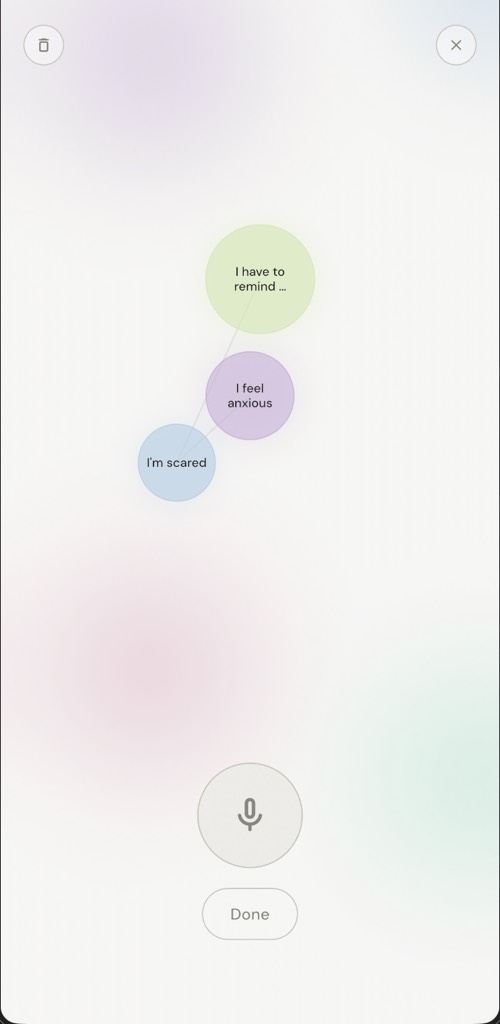
Tilt for balance, speak to offload, watch the fill, and press for breath. No menus, no scoring, no failure states.
Calm visuals and motion are not decoration. In a nervous state, tone determines whether the tool feels usable or adds load.
Co-design produced three modes. Secondary research on acute stress added the fourth: guided breathing.
Low-Fi tested whether the structure made sense. Mid-Fi tested whether the interaction felt grounding.
| Low-Fi finding | Mid-Fi change |
|---|---|
| Distraction game purpose unclear | Wording and description refined |
| Thought offloading not understandable as static | Example words and visual bubbles added |
| Static screens couldn't convey emotional tone | Visual polish moved closer to moodboard |
| Activities needed to feel real | Functional interactions added (sensor, mic, touch) |
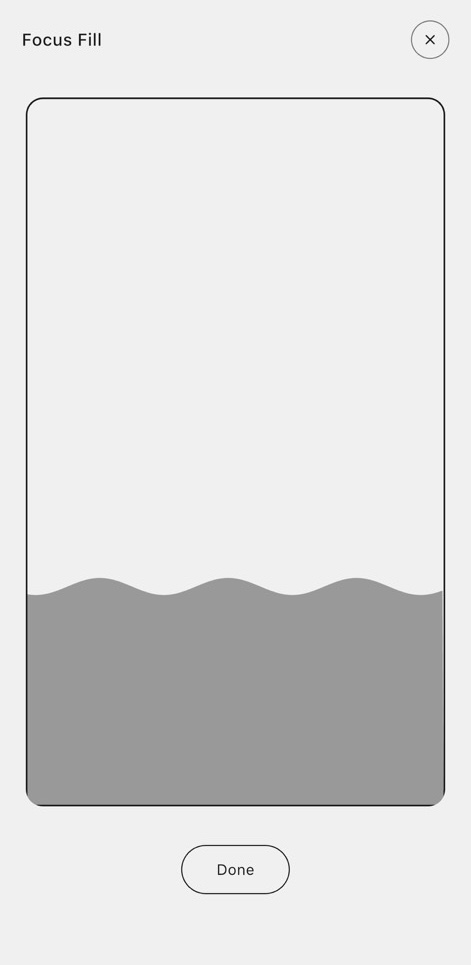
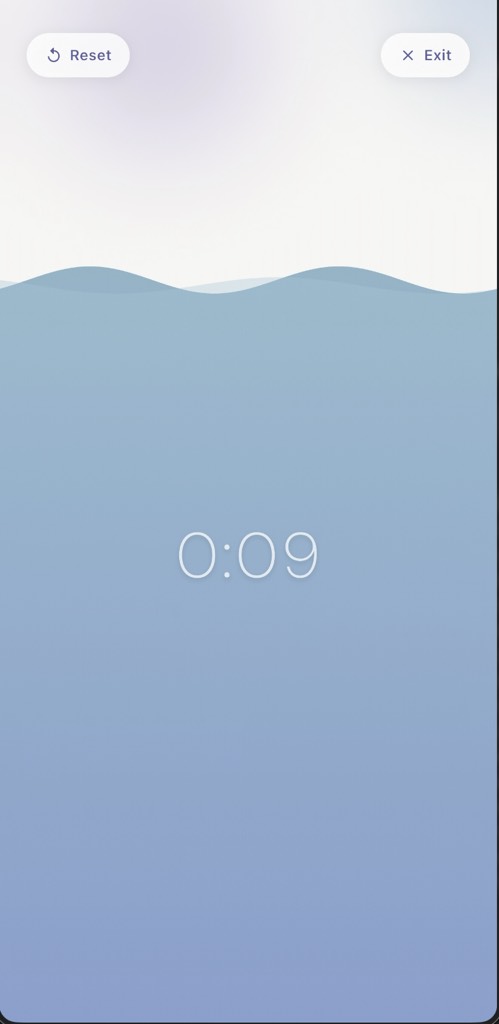
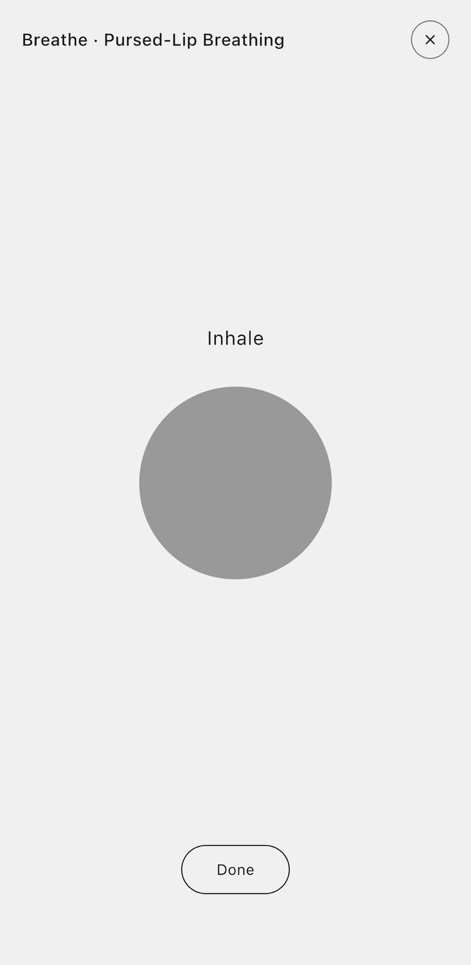
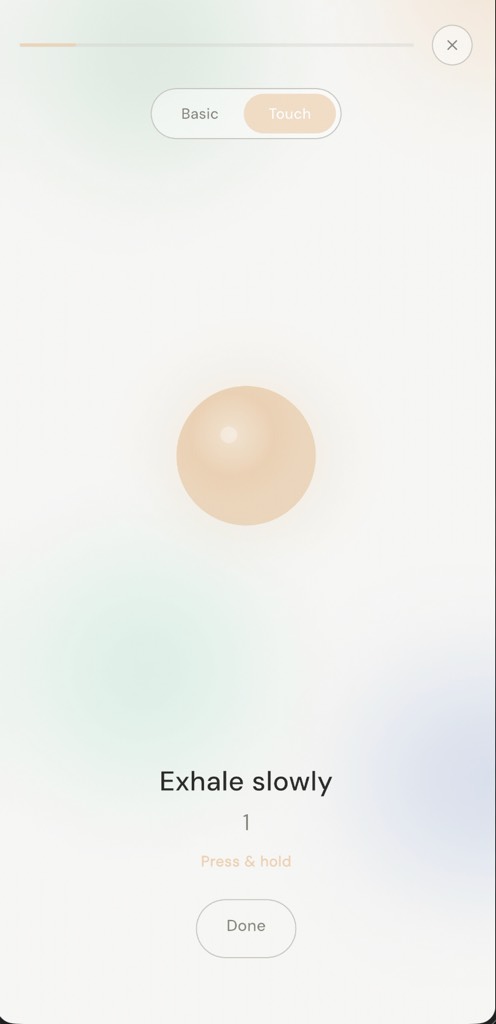
Each participant rated nervousness, mental clutter, clarity, and readiness on a 1–10 scale before and after using the mid-fi prototype.
Three states shifted meaningfully. Readiness moved less — likely because feeling "ready" depends on factors outside the app (preparation, context, stakes).
Microphone handling failed mid-session. Error handling was thin. The feature couldn't be evaluated in that test.
Balance game ball stopped responding on some devices. No calibration, no fallback state.
Users liked the press-to-exhale, release-to-inhale interaction once they understood it. They didn't understand it on first try.
For a tool meant to be used in stressful moments, technical friction undermines the entire premise.
Mid-Fi prototype implemented in Flutter, deployed to mobile. Accelerometer drives the balance game. Microphone captures offloading; touch input drives the breathing cycle.
Each mode is independently testable, so individual support modes can be refined or replaced without rebuilding the system.